
How can I talk to my child about saving if I'm still learning too?
Help a child choose a goal, track a gift and understand changing prices without promises about coin values.
Sathian Srikrishnan, dad and founder · Updated
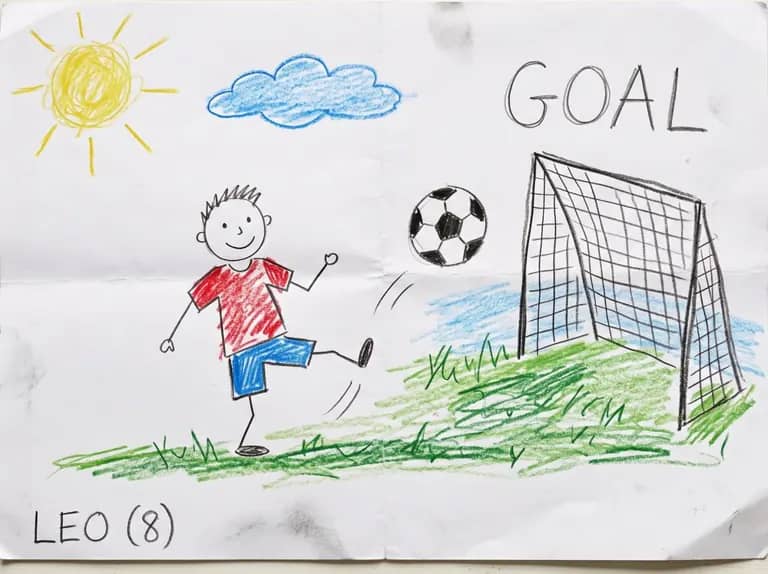
Start with one goal the child can name. Show what they have, ask what they want to do with it, and make a simple record together. You can learn beside them without having every money answer ready.
Start here
Keep the first talk short. One choice the child understands is enough for today.
Match the talk to what they can use today
The Consumer Financial Protection Bureau suggests concrete money choices for young children and thinking out loud about choices with school-age children. You can show your own checking: “I thought this cost less. Let’s look at the price together.”
A younger child may just want to choose between two things. A child ready for numbers can help write the cost and count what is left to save. Use the child’s question as the starting point, rather than a long talk about every kind of money.
Begin with something they can picture
Ask, “Is there something you would like to save for?” A drawing set or game may be easier to discuss than “the future.” If they have no goal, look at a few things they enjoy and let them think.
Help them find the cost with you. Say what you know and what you need to check. You can model the words, “I don't know yet. Let's find out.”
The goal does not have to be large. A child can practise making a choice with a small amount.
Show the starting point
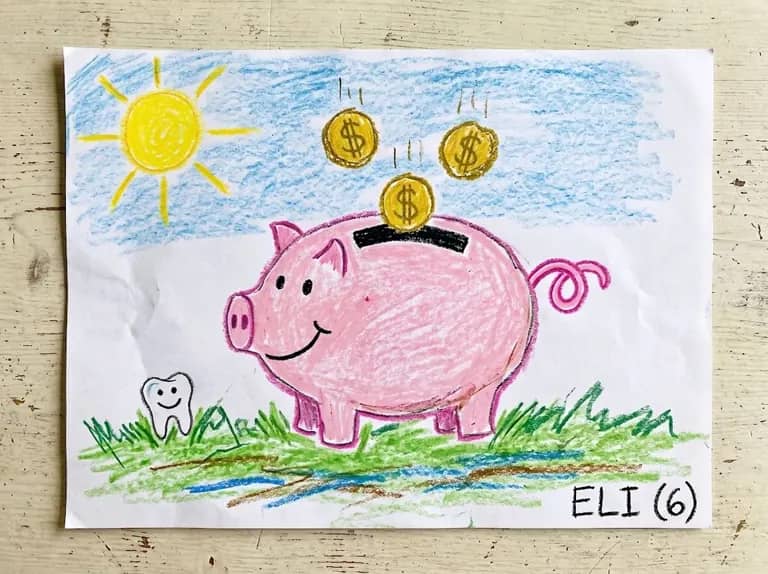
Write down the goal, its cost and what the child has now. You can draw the object at the top of the page. Explain who is looking after the money and how the child can ask to see the record.
Here is a made-up example using simple numbers: a child wants art supplies costing $20 and has $8. Together, you work out that $12 more would reach the goal. These numbers are for the example; they are not a product price or a return claim.
Ask the child to tell you what the numbers mean in their own words. You can correct the record together without making it a test.

Make a one-page tracker
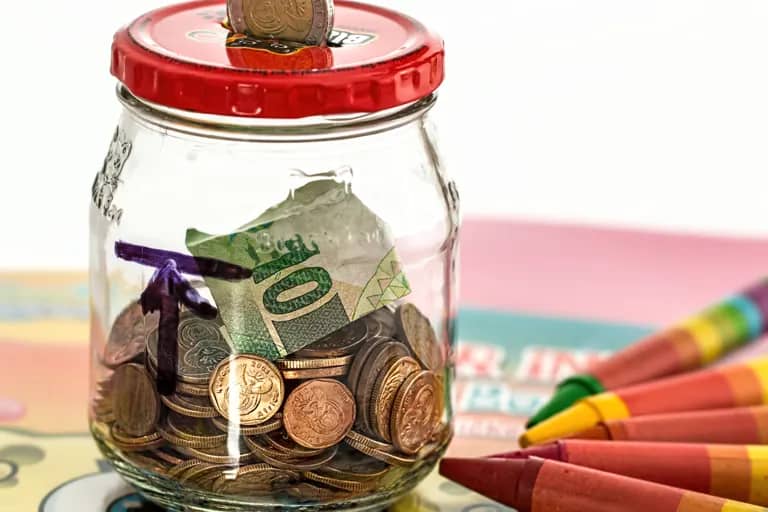
Write these lines on paper:
“My goal: ____. Cost today: ____. I have: ____. I still need: ____. Next time we will look: ____.”
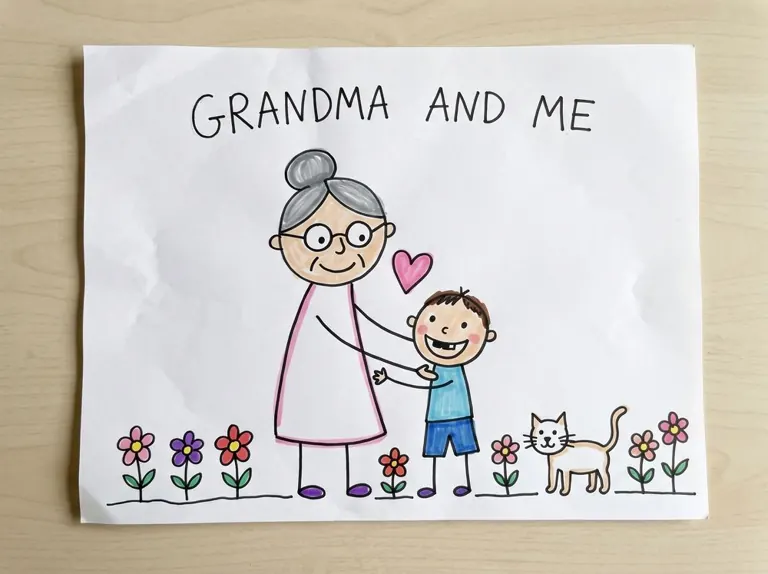
Add a line for each gift or change. “Grandma's birthday gift” can matter as much as the amount because it helps the child remember who joined in.
If the money is held in a digital place, explain that the drawing is a record of the goal, not the account itself. Use the actual balance when you review it.
Practise a choice out loud
Try: “If you use some now, there will be less toward the art set. If you keep it, you will still have this much toward the goal. What would you like to do within our rules?”
For a younger child, offer two concrete choices. An older child may be ready to suggest another plan. You decide the family limits; they can still have a voice within them.
If the child changes the goal, ask why. You can talk about waiting without treating a new interest as a failure.
Explain change without making promises
Money held in different places has different rules. Some balances can fall as well as rise. Explain only the part that matters to the place your family uses, in words you understand.
Avoid promising that waiting always makes money grow. A saving goal can teach choosing, keeping a record and asking questions without a promise about future value.
Explain why the same money may buy less
The Bank of Canada explains purchasing power and inflation: when prices rise, the same amount buys less. That is different from losing a note or spending part of the balance.
Use a made-up example. A craft kit costs $20 today. Later, the shop raises its price to $22. If the child still has $20, the record is right, but the goal now needs $2 more. This is an example, not an inflation forecast or a claim about a real shop.
Check the goal’s price again when you review it. You can choose to keep saving, pick another item or ask the child whether the goal still matters to them.
Saving is a habit, not a promise that a coin will rise
A USDC gift aims to follow the US dollar. It does not make things in shops stay the same price. Bitcoin.org explains that its price can change quickly and unpredictably. That volatility is a different risk from rising shop prices. Limited supply does not prevent a fall in price. Neither should be presented as a guaranteed way to protect the child’s buying power.
For an actual digital gift, check the coin, access route and current Terms. Keep a near-term goal separate from a promise that the gift can be spent by a certain day. Paper can hold the goal; the real account record shows what is there.
Bring relatives into the story
If the parent and child want to share the goal, tell relatives what it is. A note can say, “They're working toward art supplies and would love to tell you about their plan.”
Keep gifts as gifts. The child can share progress without having to make a performance or report every purchase to each giver.
Use a story to start another question
Learn with Tanda has stories and lessons families can explore together. Choose one yourself first, then ask what the child noticed. You can follow the question that interests them rather than covering every lesson at once.
Common questions
What if I was never taught this?
Start with the goal and the record. Learning how to ask and check is useful too.
What if they spend the money?
Talk about what they chose and what remains, within your rules. Update the tracker so the record matches what happened.
Do we need an app?
No. Paper can hold the goal and the plan. Use the account or system that fits your family for the actual money.
How often should we talk?
Pick a time you can keep, or review when a gift arrives or the child asks. A small useful talk is better than a long one they no longer want to have.