How can I keep my child's artwork without keeping every sheet?
A small display, original-art folder and private photo record that keep the child’s words with the picture.
Sathian Srikrishnan, dad and founder · Updated
Choose a few drawings with your child, record the story behind each one, and keep a clear photo as well as any originals you love. A small collection can be easier to enjoy than a pile you never open.
Start here
You do not need to sort every drawing today. Start with a handful from the nearest stack and make one place for the pieces you choose.
Make three places for the pile
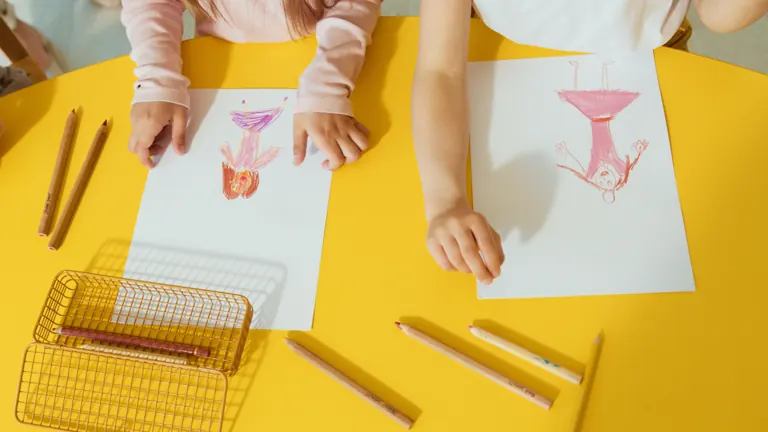
Use a spot for art you want to display now, a folder for originals to keep, and a private digital folder for photos. You can use what you already have.
Give each place a simple job. Display is for enjoying this week. The keep folder is for pieces you want in their original form. The photo folder helps you find work without keeping every sheet.
There can be overlap. A drawing may go on display, be photographed, then move into the keep folder.
Keep the making as well as the finished page
NAEYC’s guide to child-led art puts the child’s choices and the experience at the centre. It suggests noticing what is there rather than making every piece match a model.
That is a useful way to choose keepsakes too. Ask what the child tried or enjoyed. You might keep a rough first idea because they can tell you how it became a dragon. You do not have to choose only the neatest page.
Let the child tell you what the picture means
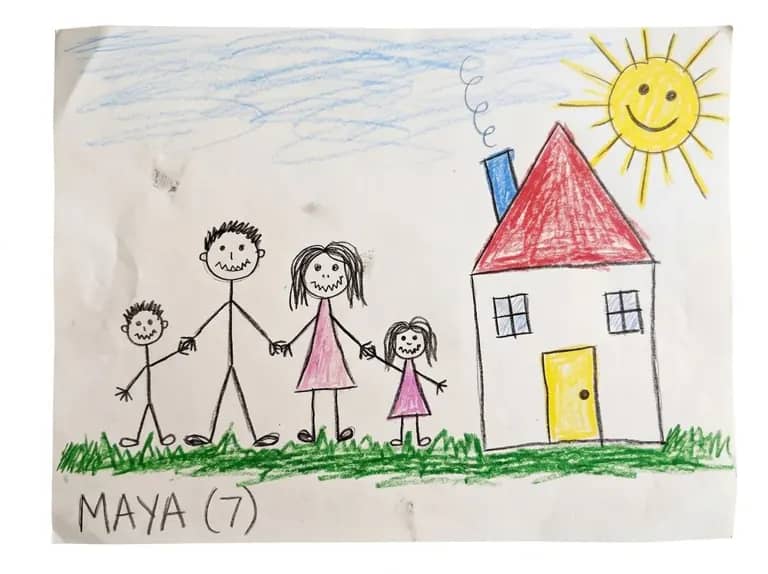
Ask, “What is happening here?” Write a few of their words on a separate note, or save a short text note beside the photo.
Try this record:
“Date: ____. Picture: ____. The child's words: ____. Why we chose it: ____.”
Leave unknown details blank. A guess about the date is less useful than an honest “summer, year unknown.” The child's story can matter more than a perfect label.
Choose what to keep in its original form
Pick pieces with a reason: a first subject, a story you want to remember, a new way of drawing, or simply a favourite. Let the child choose some too.
You do not need a set number. If you need a limit for space, choose the folder first and work within what it can hold. You can revisit the choice later rather than solving every year of artwork in one sitting.
Take a clear photo
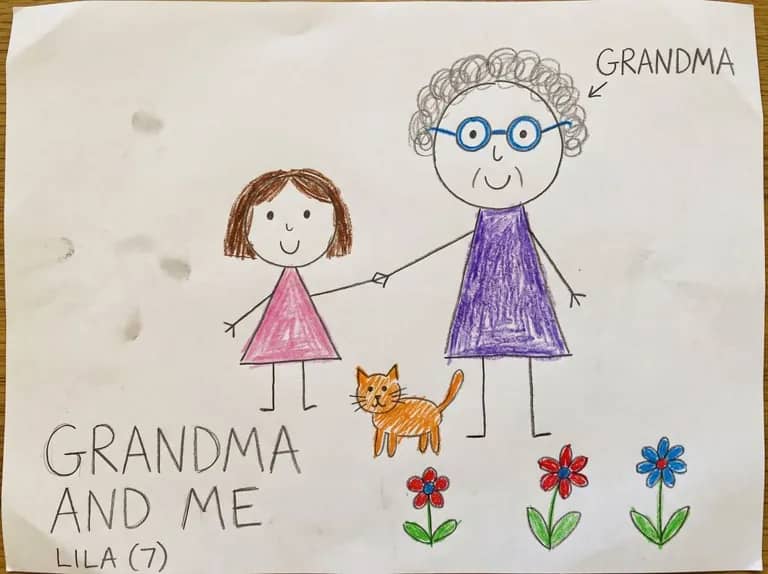
Lay the page flat in even light. Keep the camera level and include the whole drawing. Check the result before moving on: can you see the colours, the edges and the details the child points out?
Keep an original copy before making edits or cropping. If the drawing has private details on it, keep the full version private. Make a separate sharing copy only if the parent agrees.
Use a filename you can search, such as `2026-11-red-dragon`. A subject and rough date may be all you need. You do not have to put a child's full name in every filename.
Turn the collection into something you use
Choose a few pictures for a small album, a private family message or a printed keepsake. A collection becomes easier to enjoy when someone can open it and hear the story.
Here is a made-up example: a parent and child choose a dragon drawing from a large pile. The parent photographs it and writes down the child's name for the dragon. They keep the original and send a private copy to Grandma. One page now has a story attached to it.
If you want to use a drawing in a gift, Tooth Fairy Savings can include it in a printed Proof with a message. The parent and child can choose a piece that fits the occasion.
Decide what to do with the rest at your own pace
Once the record is made, you can return some pages to the child, reuse paper where it makes sense, or let pieces go. It is fine to keep an undecided stack while you choose.
The system should help you enjoy the art. It does not have to turn a family drawing into another task to do perfectly.
Common questions
Should I keep every original?
You can, but you do not have to. A clear photo and the child's words may be what you most want from some pieces.
What if my child wants to keep everything?
Give them a folder or display space and choose together. Start with what they want to show you rather than a rule about throwing things away.
Can relatives use the art?
Ask the parent and let the child help choose. Agree whether it is for a private gift or public use; those are separate choices.
How do I start with years of drawings?
Choose one small batch. Finish its photos and notes before opening the next pile.